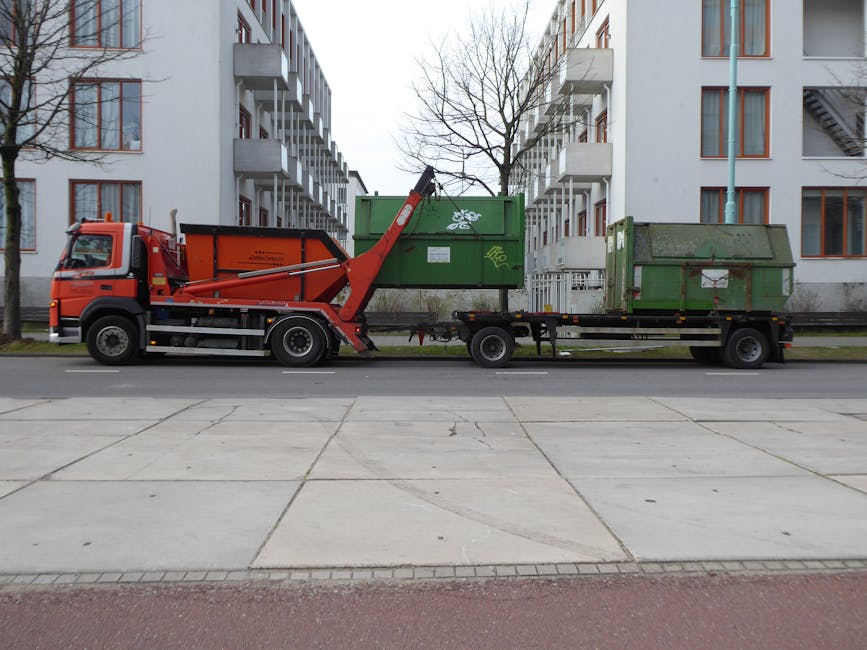
Is a skip needed? Greenwich Council Waste Rules for Moves
Posted on 06/07/2026

Planning a move can feel simple at first: box up the books, roll the sofa out, and get on with it. Then the waste appears. Broken drawers, bagged-up clutter, packaging, old carpets, a cracked bedside table, the random things that always hide behind the airing cupboard. That is where the question changes from practical to urgent: Is a skip needed? Greenwich Council Waste Rules for Moves can make the difference between a smooth moving day and a messy, expensive one.
This guide explains what usually counts as move-related waste, when a skip may help, when it is overkill, and how to stay on the right side of local rules without turning moving day into a bureaucratic headache. To be fair, most people do not want a lecture here. They just want to know what to do, what not to do, and how to avoid a last-minute pile of rubbish on the pavement.
We will keep it practical, local, and realistic. If you are decluttering before a house move, clearing a flat, or dealing with bulky items after a tenancy ends, you will find a clear path through the options below.
Why Greenwich waste rules matter during a move
Moving creates a very specific kind of waste. It is not the same as your normal weekly bin bag. You may have broken furniture, dismantled fittings, cardboard, packing foam, mattress wrapping, old appliances, and the kind of mixed junk that cannot simply be shoved into one black sack and forgotten about. In a borough like Greenwich, the way you dispose of that material matters because there are limits on what can be left out, where it can go, and how it should be presented.
The big issue is timing. On moving day, people often leave things by the front door or in shared hallways "for the evening." A couple of hours later, that becomes fly-tipping territory if it is not handled properly. Nobody wants to start a new chapter by annoying neighbours or risking a fine. And yes, the smell of wet cardboard after a rainy London morning can turn a small problem into a very obvious one.
Understanding the rules also helps you decide whether a skip is genuinely needed or whether another option makes more sense. A skip can be brilliant for bulky clearance, but it is not always the cleanest or cheapest answer. In some moves, a well-planned collection, a load carried away by a removals team, or a trip to a suitable waste facility may be the better choice.
There is also the practical side: if you are moving from a flat with tight access, bin stores, or limited parking, waste strategy needs to be part of the move plan from the start. That is especially true where access is awkward, because clutter left too late can block the lift, staircase, or loading bay. If you want a feel for access-related planning, these access tips for removals near Crossness Pumping Station are a useful read for thinking ahead.
How Greenwich waste rules for moves work
Here is the simple version. If waste is created as part of your move, you still need to dispose of it responsibly. That sounds obvious, but in practice there are several ways it can happen:
- Re-use or donate items that are still in usable condition.
- Separate recyclable materials such as cardboard, clean paper, some plastics, and certain metal items where appropriate.
- Arrange a bulky waste collection or equivalent service if your move generates larger items.
- Use a skip if you have a large volume of mixed waste and a lawful place to put it.
- Remove waste yourself only if you can transport and dispose of it correctly.
The right choice depends on volume, type of waste, access, and time pressure. If you are clearing a full property, the answer may be yes, a skip helps. If you are moving a one-bed flat and mainly dealing with boxes, soft furnishings, and a few broken bits, then a skip might be unnecessary.
One thing people sometimes overlook is mixed waste. A skip seems convenient because everything can go in one place, but not every material should be mixed casually. Hazardous items, fridges, paint tins, chemicals, and certain electricals need separate handling or specialist disposal. That is where a rushed moving day can go sideways, and fairly quickly too.
For people trying to streamline packing at the same time, it helps to think about waste before the van arrives. Our guide on effective packing techniques pairs well with decluttering, because good packing usually exposes what you do not need.
Key benefits and practical advantages
Choosing the right waste approach during a move is not just about compliance. It saves time, reduces stress, and makes the move feel less chaotic. And let's face it, moving already has enough moving parts.
- Cleaner property handover: fewer leftover items mean fewer disputes with landlords or buyers.
- Better access on moving day: hallways, entrances, and loading points stay usable.
- Lower risk of fines or complaints: properly managed waste is less likely to create trouble.
- More efficient loading: removals teams can focus on what needs transporting, not on navigating clutter.
- Less last-minute panic: you are not scrambling to find somewhere for a broken wardrobe at 4 p.m.
There is also a quieter benefit: decision-making feels easier when you have a plan. A clear waste strategy stops every old item from becoming a fresh debate. Keep it, bin it, donate it, recycle it, move it. Simple. Not always easy, but simple.
If you are clearing a home before completion or end of tenancy, pairing waste planning with a pre-move decluttering plan can cut the amount you need to handle on the day itself. That tends to save money too, especially where access or parking is tight.
Who this is for and when it makes sense
This question matters most for people who are producing more than a few bin bags of waste. If that sounds like you, the decision becomes less about theory and more about logistics.
You may need a skip or alternative clearance solution if you are:
- emptying a family home after years of accumulated belongings
- clearing a rental property between tenants
- disposing of damaged furniture after a long move
- renovating at the same time as moving
- dealing with office furniture, filing, or equipment
- moving from a flat with very limited access or no easy lift support
It can also make sense if you are short on time. Same-day or next-day moves often leave little room for multiple trips. In those situations, planning waste removal in advance can prevent the classic "we'll sort it tomorrow" situation. Tomorrow then becomes next week. You know how it goes.
If you are in a smaller flat move, you may not need a skip at all. A careful sort, a few recyclable stacks, and a professional removals run may be enough. For tighter homes and stair-only access, flat access solutions can be more useful than adding a skip to an already crowded street.
Step-by-step guidance
The easiest way to answer is a skip needed? is to work through the move in order, not by guesswork on the day.
- Sort everything into categories. Keep, sell, donate, recycle, waste, specialist disposal.
- Measure the volume. A few bags and a dismantled shelf are very different from a garage full of mixed items.
- Check access. Ask where a skip could legally sit, whether there is enough space, and whether it would block neighbours or vehicles.
- Separate restricted items. Do not mix general rubbish with anything hazardous, electrical, or bulky in a way that causes problems.
- Choose the disposal route. Skip, collection, reuse, recycling, or removals company support.
- Book early. Waste options disappear fast near moving weekends and at month-end.
- Keep the property tidy. Bag sharp fragments, flatten cardboard, and leave walkways clear.
A good rule of thumb: if your waste is mostly reusable packaging and a few broken bits, skip hire may be too much. If you are clearing mixed rubbish from an entire property, it may be the most practical route. The trick is not to decide based on habit. Decide based on the actual pile in front of you.
For people with bulky items that need extra care, a specialist move can be safer than trying to force everything into a disposal process. If you are moving heavy or awkward pieces, moving bulky items from Thamesmead flats without damage gives a useful sense of the planning involved.
Expert tips for better results
From a practical point of view, the best move is usually the one that makes waste disappear before it becomes a problem. A few simple habits help a lot.
- Declutter room by room. It keeps decisions manageable and stops the whole house becoming one giant mess.
- Keep reusable items separate. If something still works, do not let it get buried under rubbish.
- Flatten cardboard immediately. It takes up far less room and makes loading easier.
- Bundle soft waste neatly. Loose bags are awkward, slippery, and annoying to move.
- Protect floors and shared spaces. Moving waste through communal areas needs a bit of care, especially in flats.
- Think about timing. Early morning is often calmer than a late-afternoon rush when bins are full and everyone is trying to park.
Here is a small but useful one: keep a "last bag" box. Put tape, bin liners, marker pens, gloves, and a utility knife in it. That tiny box saves real time when you are down to the final stretch and everything is somehow sticky, dusty, or both.
If heavy lifting is part of your clearance, do not wing it. A lot of moving injuries happen when people try to save a little time. Our article on solo heavy object lifting explains why the safest choice is often the boring one.

Common mistakes to avoid
Most waste problems during a move are predictable. That is the annoying part. The good news is they are also avoidable.
- Leaving rubbish in communal areas. It can block access and attract complaints very quickly.
- Using a skip without checking placement. Some streets and driveways are simply not suitable.
- Mixing everything together. This makes recycling harder and can create disposal issues later.
- Underestimating volume. What looks like "a few items" often becomes a full load once dismantled.
- Forgetting restricted items. Electricals and certain liquids need more care than general waste.
- Booking too late. Waste collection slots and skip availability can disappear fast around month-end.
Another common one: assuming the council will deal with everything in the same way it deals with normal household waste. Not always. Move waste often needs a different plan. If you are already facing parking pressure or tight access, the article on avoiding parking fines during removals is worth a look because waste and parking issues tend to appear together.
Tools, resources and recommendations
You do not need a warehouse of equipment to manage moving waste well, but a few basic tools make life easier.
- Heavy-duty bin bags for general rubbish and soft waste
- Marker pens and labels so nobody mistakes waste for keepers
- Gloves for handling sharp edges or dusty items
- Cutter or utility knife for breaking down cardboard safely
- Furniture sliders and straps if you need to move bulky items before disposal
- Storage boxes for separating donate, recycle, and waste categories
Useful preparation also includes planning the move itself. If you are packing from scratch, this guide to a hassle-free moving adventure fits neatly with waste planning, because the calmer the packing process, the easier it is to avoid unnecessary rubbish.
For furniture-specific handling, you might also benefit from reading about storing your sofa the right way and moving your bed and mattress safely. Those pages are especially handy if the item is not waste, just temporarily out of use.
Law, compliance, standards and best practice
When dealing with waste during a move, the safest approach is to follow the basic UK rule set around responsible disposal and keep within local collection expectations. In plain English: do not dump, do not overfill shared areas, and do not leave anything out unless you know it can be there.
Best practice usually means:
- keeping waste contained and tidy
- using legal disposal routes only
- separating recyclable material where possible
- handling bulky or awkward items with care
- making sure nothing obstructs pavements, entrances, or emergency access
If a skip is used, make sure it is appropriate for the site and that it does not create a hazard. If it sits on private land, that may be straightforward. If it is going on a street or shared access point, the rules can be more complicated and should be checked carefully before anything is delivered. This is one of those areas where a quick assumption can become an expensive mistake. No drama, just facts.
Also worth saying: safety matters. Broken furniture, nails, sharp packaging edges, and overloaded bags can cause injuries in a hurry. Our health and safety approach reflects the common-sense idea that moving should not end with a trip to A&E.
Options, methods and comparison table
Here is a plain comparison of the most common choices for move-related waste.
| Option | Best for | Advantages | Watch-outs |
|---|---|---|---|
| Skip hire | Larger clear-outs, mixed waste, renovation debris | Convenient, holds a lot, good for one-off jobs | Needs space, may need permission, can be excessive for small moves |
| Bulky waste collection | Single large items or limited quantities | Less space-heavy, simpler for small clearances | May not suit mixed waste or last-minute deadlines |
| Recycling and donation | Usable items, cardboard, clean materials | Lower waste, more sustainable, often cheaper | Needs sorting and a bit more time |
| Removals team support | Moves where waste and furniture need coordinated handling | Smoother logistics, less lifting for you | Not every item is suitable; some waste still needs separate disposal |
For a lot of people, the answer is not one method but a mix. Keep the good stuff moving, recycle what you can, and only use a skip if the volume genuinely justifies it. That hybrid approach is often the sweet spot. A bit less glamorous, perhaps, but much more sensible.
If you want help matching the solution to the property type, this SE2 to SE28 checklist is a solid local planning reference, especially where timing and access are already tricky.
Case study or real-world example
Picture a typical Greenwich flat move. Two adults, one child, a hallway full of cardboard, an old bed frame, three bags of mixed clutter, and a kitchen drawer that seems to have bred cables for sport. The tenant wants the place cleared the same day, the lift is shared, and the parking outside is limited. On paper, it looks like a simple move. In reality, the waste is the part that threatens to derail everything.
In that kind of scenario, the best outcome is usually not "dump everything in a skip and hope." More often, the smarter route is:
- sort usable items for donation or reuse
- break down cardboard early
- separate bulky furniture from true waste
- use removals support for the valuable or fragile items
- arrange a disposal method for the remaining waste that fits the street and timing
That keeps the corridor clear, avoids a messy pile at the kerb, and reduces the chance of conflicts with neighbours or building managers. It also means the move finishes with the property looking presentable, which always helps when keys are being handed over and everyone is watching the clock.
We see a similar pattern in more complicated homes and estates too. The exact details change, of course, but the principle does not: sort early, handle waste properly, and choose the method that fits the load rather than the one that feels fastest in the moment.
Practical checklist
Use this before moving day. It keeps things calm.
- List everything that is staying, going, or being donated
- Separate cardboard, soft waste, furniture, and restricted items
- Check whether a skip would fit safely and lawfully
- Confirm whether waste can be taken away by a removals team
- Flatten and bundle packaging before the van arrives
- Keep exits, lifts, and communal areas clear
- Label waste clearly so nothing gets mixed back in
- Plan for sharp, heavy, or awkward items separately
- Allow extra time for disposal if the move is at month-end
- Do a final walk-through before leaving the property
One small habit can save a lot of grief: take a quick photo of the cleared rooms once the waste is gone. It is not dramatic, but it can be very helpful if there is any later question about condition or completion.
Conclusion
So, is a skip needed? Greenwich Council waste rules for moves do not point to one single answer. What they really point to is good judgement. If you have a lot of mixed waste, a skip may be the right tool. If your load is modest, sorting, recycling, and careful disposal may be smarter, cheaper, and less awkward.
The safest approach is to think about the move as a whole: access, timing, volume, item type, and the space available outside the property. Once you do that, the right decision usually becomes obvious. Not always easy, but obvious enough.
If you are still unsure, start by reducing the amount you need to dispose of, then choose the most practical route for the remainder. That usually leads to a cleaner move and fewer last-minute surprises.
Get a free quote today and see how much you can save.
And if you can finish the move with one less pile of stress by the front door, that is a good day's work, really.